
An increasing number of people realise that the world’s future hangs in the balance.
Some people are highly motivated to take action to try and create a better future. But changing the world is not easy. Many have tried and most have failed.
This matters more now than ever. AI has democratised access to knowledge and capability, so the old competitive advantages, better information, better technology, are evaporating fast. What's left is our ability to connect and work together across boundaries: departments, organisations, sectors, even nations. And on current evidence, we're simply not good enough at it yet.
Why? Because humanity’s collaborative capability just hasn’t reached a high enough level of sophistication to prevent the failure, regardless of which strategy for change we choose:
The Parliament of Religions Problem
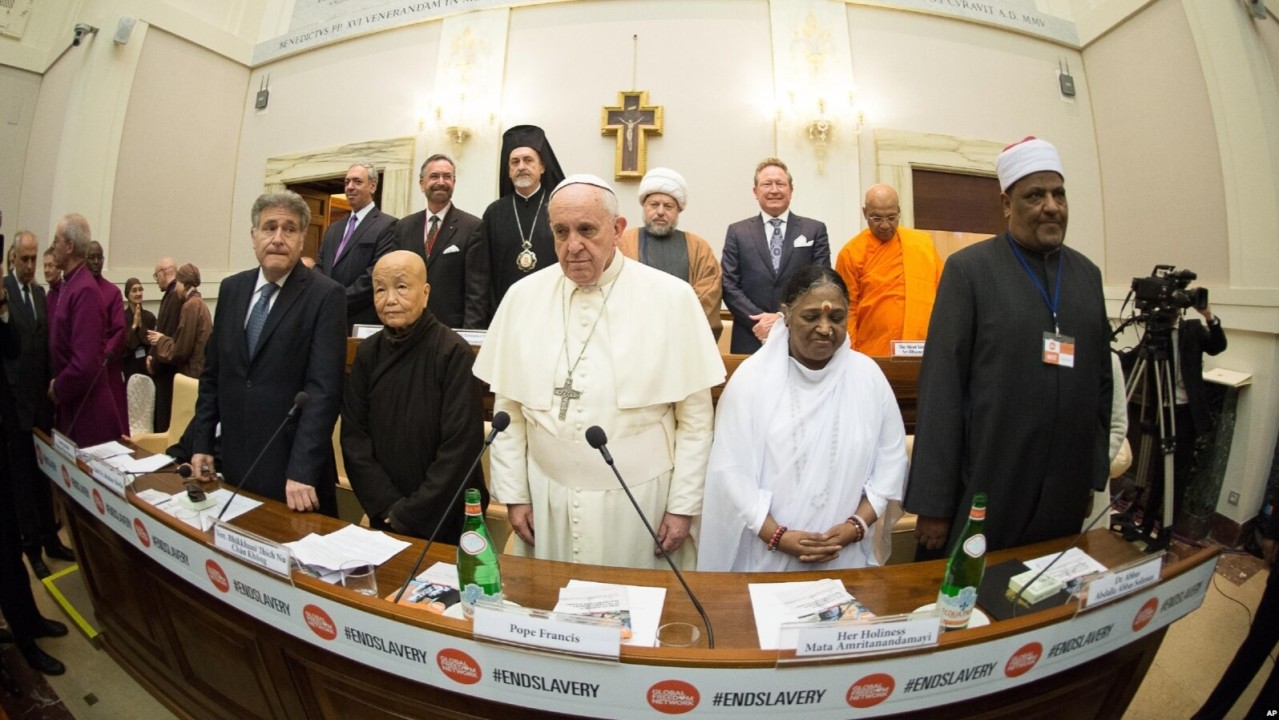
1. Top-down: The quickest way to change the world is to work with the world’s leaders whether religious, corporate, political, social or non-governmental. This can create scale impacts quickly, but getting people from different denominations or perspectives to agree usually fails. The result is usually polite non-engagement with no real integration. No effective collaboration happens. For example, some years ago my mentor, Ken Wilber, gathered all the leaders from America’s major religious communities and hosted them for a three-day meeting in his loft in Denver. The goal was to reduce inter-religious conflict in the world. After three days of talking, the general stance of all who attended was: “If you respect us and don’t mess with our community, we won’t mess with yours. Nice to meet you”. Basically, a stand-off occurred, where each leader privileged serving their own faith community rather than the wider human community. We now call this inability of the key players to collaborate the ‘Parliament of Religions’ problem.
2. Bottom-up initiatives can also reach scale, but they are usually much slower, more expensive and harder to coordinate. Mass movements can effect change and are less susceptible to manipulation.
3. Local, small-scale community-based activity is often tried because it feels more achievable for individuals. But the impact can be negligible unless such efforts gather momentum and grass roots support to scale.
4. Leveraging global, high-profile players. Such individually-led efforts, which are usually favoured by power brokers and billionaires, can raise significant awareness. It’s common for such approaches to co-opt celebrity names to the process. Examples would be the ‘Elders’ or ‘Plan B’ initiatives. Sadly, like most top-down efforts the progress is constrained by the vicissitudes of individual players, and they too struggle to create real traction.
Whatever strategy we choose, to try and effect large scale change, all of them hinge on our human ability to connect and collaborate beyond your own tribe, family or community.
If we lack collaborative capability we will continue to fail to resolve the ‘Parliament of Religions Problem’, and our efforts will continue to flounder.
The Graveyard of Good Intentions
There are many examples that suggest humanity’s current level of collaborative capability is insufficient to achieve sustainable positive change.
In 2015 exactly 196 ‘parties’ signed The Paris Climate Agreement with genuine fanfare. A decade on, several major signatories have missed their own targets by a mile, one has withdrawn entirely, and others quietly water down commitments whenever domestic politics gets uncomfortable. It wasn't a bad agreement, but without strong relational bonds such promises don't survive contact with self-interest.
The Paris Agreement was preceded by the Kyoto Protocol, but that never even got the world's largest economy to ratify it, and one signatory withdrew altogether rather than pay the price of what it had agreed.
Nearly 20 years earlier, in 1998, Tony Blair launched his "Third Way" initiative. This was an attempt to create collaboration across a political divide that had defined Britain for a generation, blending market economics with social justice. It generated real energy for a few years. Even Bill Clinton got involved. But it eventually collapsed because political parties descended into their old left-right trench warfare; the 2008 global financial crisis shattered all faith in market deregulation because it massively favoured the rich and accelerated financial inequity; the Iraq war destroyed the public trust in Tony Blair; and the political model simply wasn’t mature enough to deal with the complexity of the issues it was facing.
In 2010 David Cameron launched his "Big Society" initiative, a genuinely interesting idea about devolving power to communities and third-sector partners. This suffered an almost identical fate: starved of the sustained investment and shared ownership it needed to survive its first spending review.
More recently, I facilitated a meeting in the UK parliament, involving all the relevant stakeholders, to discuss the problem of Unaccompanied Asylum-Seeking Children (UASC) entering the UK. It was prompted by the dramatic increase in the number of children crossing the channel. With all the relevant stakeholders in the room and using Crowdocratic process, we made more progress, according to most of those present, in three hours than had been achieved in the previous three years. Sadly, just a few days after the event the CEO of the local authority explicitly killed any future momentum by threatening the career of one of the founders of the process. Ironically, we were rendered dead in the water. Ego overruled systemic benefit.
More recently, I was fortunate to facilitate a similar initiative on the future of the food industry in the UK. Again, great progress was initially made over three events. But some stakeholders, on reflection, allowed their self-interest to overrule the national interests and they disengaged from the process.
Corporate scandals tell the same story. For over a decade the UK Post Office prosecuted hundreds of innocent sub-postmasters rather than admit its Horizon IT system was faulty, protecting institutional reputation over the people it existed to serve. Nearly a thousand people were wrongly convicted, families were bankrupted, and at least a dozen took their own lives before the truth surfaced. When an organisation quietly decides its own survival matters more than working with the community it is meant to serve and collaborating with stakeholders to resolve difficulties, we end up witnessing one of Britian’s most shameful corporate episodes.
The UK's privatised water industry tells a near-identical story, laid bare in Channel 4's docudrama Dirty Business. Since privatisation in 1989, water companies have paid out an estimated £76 billion in shareholder dividends while racking up roughly £56 billion in debt, and between 2019 and 2024 alone they discharged raw sewage into rivers and coastal waters for a combined 16.3 million hours. Shareholder return and community wellbeing were never reconciled. One simply overruled the other, for more than three decades.
In the 2000s, Nokia and a consortium of handset makers built Symbian, pooling resources to create a shared smartphone operating system rather than each fighting alone. On paper it was smart, cross-industry collaboration. In practice, the consortium moved at the speed of its slowest, most political member, while Apple simply built one integrated product with one chain of command. Collaboration lost to a corporate dictatorship.
Then there's COVAX. Built at extraordinary speed in 2020 with a genuinely noble aim: distribute COVID vaccines equitably across rich and poor nations alike. Within a year, wealthy nations that had co-designed the scheme were quietly signing bilateral deals to secure supply for themselves, leaving COVAX competing against its own founding members for doses. By early 2022, over 80% of people in high-income countries were vaccinated against under 10% in low-income countries. Everyone had agreed to the principle. Almost nobody held to it once their own population's needs were on the table.
Different decades, different continents, different subject matter. Same underlying failure: agreements built on shared language rather than shared trust and collaborative capability simply collapse the moment self-interest reasserts itself.
Here’s the only question that matters: Does your organisation have the maturity and collaborative capability to work with partners, large and small, for the greater good?
Next week's paired Newsletter looks at how and why we can still turn this around, and where, against all the odds, genuine collaboration is already happening.